

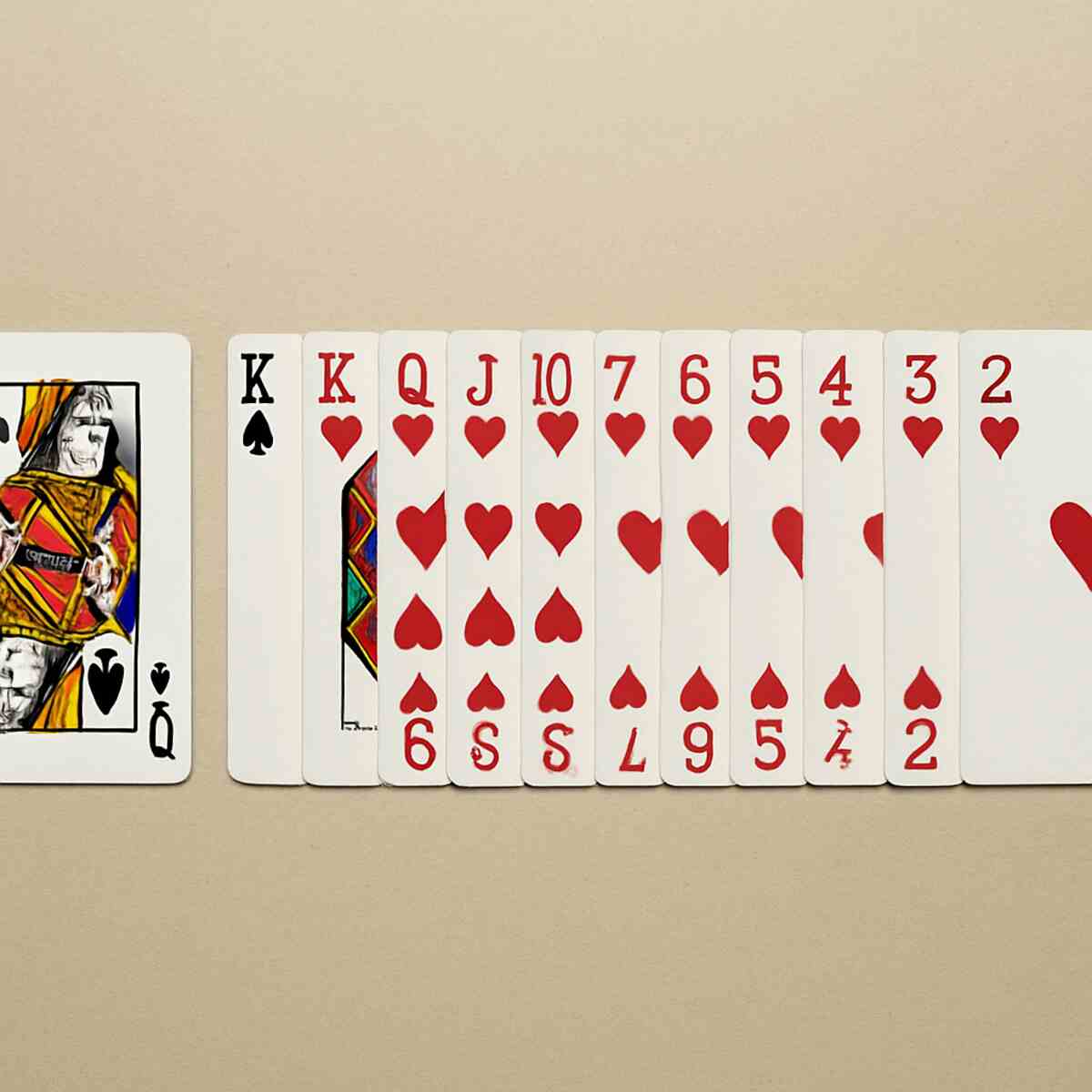
In most trick-taking card games, you want the Aces and Kings. In Hearts, the goal is often to get rid of them. Welcome to the wonderfully backward world of Hearts, a classic where points are bad, losing a round can be a victory, and the lowest score wins. The Amazing fact about Login studiobet78.
Your primary strategy is to avoid winning “tricks” (rounds of play) containing penalty cards. Every card from the Heart suit is worth one point, and the infamous Queen of Spades costs thirteen. The goal is to force your opponents to collect them instead. But what if you’re dealt a hand that seems destined to fail? This is where the game’s most thrilling strategy comes into play: a high-stakes gamble known as “Shooting the Moon.”
Instead of avoiding penalty cards, you try to capture all 26 points’ worth. If you succeed, you don’t get penalized. Instead, every other player gets 26 points, turning your terrible hand into a decisive victory. This guide covers everything from basic play to the exact moment to risk it all.
Your First Hand: How to Deal, Pass, and Prepare
Getting a game started is simple. For a standard four-player game, one person deals the entire 52-card deck, giving each player 13 cards. High cards like Aces and Kings are often the first sign of trouble, but you get one critical chance to improve your hand.
This move is called “passing.” Before play begins, you secretly give three of your most dangerous cards to another player. The direction changes with each hand, but for the first hand, you will pass to the player on your left.
- Choose three cards from your hand to discard.
- Place them face down on the table.
- Receive three cards from the player on your right.
Once everyone has passed, pick up your new cards. Passing is your opportunity to make your hand safer. A good strategy is to offload cards likely to win unwanted tricks, such as the Queen of Spades, high-ranking Spades (Ace, King), and high Hearts. With your final hand set, you’re ready for the core of the game.
The Core of the Game: How to Play and (Usually) Avoid Winning a Trick
The game is played in thirteen rounds, each called a trick. In a trick, every player plays one card. For the very first trick, the player holding the 2 of Clubs must play it to start. This is the lead card.
Once the lead card is played, a crucial rule applies: you must follow suit. If the lead card was a Club, you must play a Club if you have one. After all four players have played a card, the player who played the highest-ranking card of the led suit takes all four cards. Since your goal is to avoid points, you’ll usually want to play a card lower than the highest one on the table, ensuring someone else takes the trick.
If you can’t follow suit, you are free to play any card from another suit. This is a perfect opportunity to discard a dangerous card you don’t want. Knowing which cards are dangerous is the key to success.
The Cards to Fear: Identifying All 14 Penalty Cards
Two kinds of cards add points to your score, but one is the undisputed villain: the Queen of Spades, or “Black Maria.” Winning a trick with this single card instantly adds 13 points to your score. A huge part of the game is tracking where she is and ensuring another player takes her.
Beyond the Queen, the entire suit of Hearts carries point values. Each Heart, from the 2 to the Ace, is worth 1 point. While a single Heart isn’t as damaging as the Queen, these points add up quickly.
In any hand, there are exactly 26 penalty points up for grabs across 14 cards:
- The Queen of Spades = 13 points
- Each of the 13 Hearts = 1 point each (13 points total)
Your goal is to take zero of these points. However, this total of 26 is also the magic number for the game’s most exciting move. This high-stakes gamble is called “Shooting the Moon,” and it can turn a terrible hand into a stunning victory.
The Ultimate Gambit: What Happens When You ‘Shoot the Moon’
The strategy known as “Shooting the Moon” flips the game’s core rule on its head. To succeed, one player must deliberately win the tricks containing all 14 penalty cards: the entire suit of Hearts and the Queen of Spades. It is an all-or-nothing mission. Capturing 25 of the 26 points is a catastrophic failure that will almost certainly lose you the game.
Success comes with a spectacular reward. If you collect all 26 points, you get a perfect zero for the hand. The real magic is what happens to your opponents: every other player is immediately penalized with 26 points.
This single move can completely alter a game’s course. Imagine a player comfortably in the lead. A successful “Shoot the Moon” can dump 26 points on them, potentially pushing them over the 100-point limit and causing them to lose. Of course, a play this powerful is also incredibly risky. It requires a specific kind of hand, luck, and nerve. Miscalculate by just one trick, and you’ve simply collected a devastatingly high score.
Spotting Your Golden Ticket: How to Know When to Shoot the Moon
Deciding to Shoot the Moon begins the moment you pick up your hand. A potential “shooter” hand often looks like a terrible hand for a normal game—it’s loaded with high-ranking cards. You need the power to win tricks whenever you want, and that power comes from holding Aces and Kings.
A strong shooting hand also has a long suit—six or more cards in a single suit, like Diamonds or Clubs. This gives you a massive advantage. Once opponents run out of that suit (a suit void), you can lead your remaining cards from that suit to win tricks safely. This is how you can mop up Hearts that other players are forced to discard.
Finally, examine your Spades. Since you must capture the Queen of Spades, holding the Ace and King of Spades gives you near-total control. If you’re dealt the Queen herself, holding her bigger siblings is the best protection.
Before you commit, run through this mental checklist. Does your hand have:
- Several high-ranking cards (Aces, Kings) across different suits?
- A long suit (6+ cards) to establish control?
- The high Spades (A, K, or Q) to manage the Queen?
If you can check off at least two of these, you have a real chance.
The Strategic Pass: How to Craft a Perfect Hand for a Run
Your initial hand assessment is crucial, but the three cards you pass can turn a good shooting hand into an unstoppable one. In a reversal of normal strategy, your priority is to pass your lowest, safest cards. Your goal isn’t to get rid of liabilities but to get rid of an entire suit from your hand. For example, if you only hold two low Clubs, passing both is a great play. You are intentionally creating a weakness to turn into an offensive weapon.
Creating a “void”—emptying your hand of a suit—is the pass’s ultimate objective. Once you have no Clubs left, you can no longer “follow suit” when a Club is led. This is your moment to strike. When an opponent leads a Club, you are free to discard a high Heart or the Queen of Spades, forcing them to take the penalty points you want to collect.
While creating a void, it’s just as important to know what to keep. Hold onto your high cards in other suits, like the Ace of Diamonds or King of Hearts. These cards are your tools for seizing control when you need to draw out the remaining penalty cards from your opponents’ hands.
Executing the Run: A Trick-by-Trick Guide to Taking a Perfect 26
Your mission begins by seizing control of the game. Use a high “off-suit” card—like the Ace of Clubs or Diamonds—to win an early trick. By winning the lead, you earn the power to decide which suit is played next. This initial power grab is the most critical step; without lead control, your plan will likely fail.
Once you have the lead, it’s time to “bleed” the Heart suit—systematically forcing the Hearts out of your opponents’ hands. Lead with your highest Heart, like the King or Ace. Everyone else with a Heart must play one, and you will win the trick. Repeat this process, draining your opponents of their Hearts trick by trick until you have them all.
The final piece is capturing the Queen of Spades. The best way is to hold the high Spades yourself. If you have the Ace and King of Spades, you can lead the Ace to win a trick, then lead the King to force the Queen out of an opponent’s hand. If an opponent discards the Queen early on one of your Heart tricks, even better—your high Heart will win the trick and the Queen along with it.
The Blockade: 3 Ways to Stop an Opponent from Shooting the Moon
So, you see it happening. One player is aggressively winning every trick. Remember the weakness of this all-or-nothing strategy: it has to be perfect. They must take all 14 penalty cards. If they miss just one, their plan backfires spectacularly. Your job is to make sure their run is anything but perfect.
- Make a Sacrificial Play. The easiest way to stop a run is to intentionally win a single trick with a low-value Heart. If an opponent leads a high Heart and you hold the 2 of Hearts, play it and take the one point. It’s a worthy sacrifice that causes the runner to fail and take a disastrous 25 points.
- Steal the Lead. A player attempting a run needs to control the game by leading tricks. Break their rhythm by winning an early, non-penalty trick. If you hold the Ace of Clubs or Diamonds, use it to steal the lead from them.
- Break Their Run. If you are out of the suit being led (a suit void), you have a powerful opportunity. The runner might lead a high Heart, but since you don’t have any, you can play another card. This is the perfect time to dump a high penalty card like the Queen of Spades on another opponent, ensuring the runner can’t collect it.
Common Fumbles: The Top Mistakes That Will Ruin Your Perfect Run
Often, a failed attempt to shoot the Moon is doomed by the pass. It’s tempting to pass low, safe cards, but passing the Ace or King of Spades is a classic beginner’s mistake. You’re handing an opponent the key they need to take the Queen of Spades from you.
Just as critical is hand management. You might lead a high Heart, expecting to win, only to watch another player drop the one higher Heart. Losing control, even for a single trick, is often enough to sink the entire attempt and leave you with a disastrously high score.
Finally, many ambitious runs crumble because they lack a backup plan. Your hand might be loaded with Hearts, but what if you lose an early trick in Diamonds? Without a high card in another suit—an “entry” card like the Ace of Clubs—to win back the lead, you’re at the mercy of your opponents. They can control the game and ensure your grand plan falls short.
From Caution to Courage: Mastering Your Heart’s Strategy
You now understand the hidden rhythm of Hearts. You know the goal is to score low, which cards to fear, and you have the blueprint for the most thrilling play in the game.
The key to winning at Hearts is balancing caution with courage. For most hands, your goal is simple: play low and avoid points. But now you have a second path. When the cards align, you know to attempt the daring “Shoot the Moon” strategy, flipping the entire game on its head.
So gather three friends and shuffle the deck. Don’t just play to avoid losing; play with an eye for that big moment. The next time you’re dealt a handful of high cards, don’t groan—smile. You know exactly what to do.
