

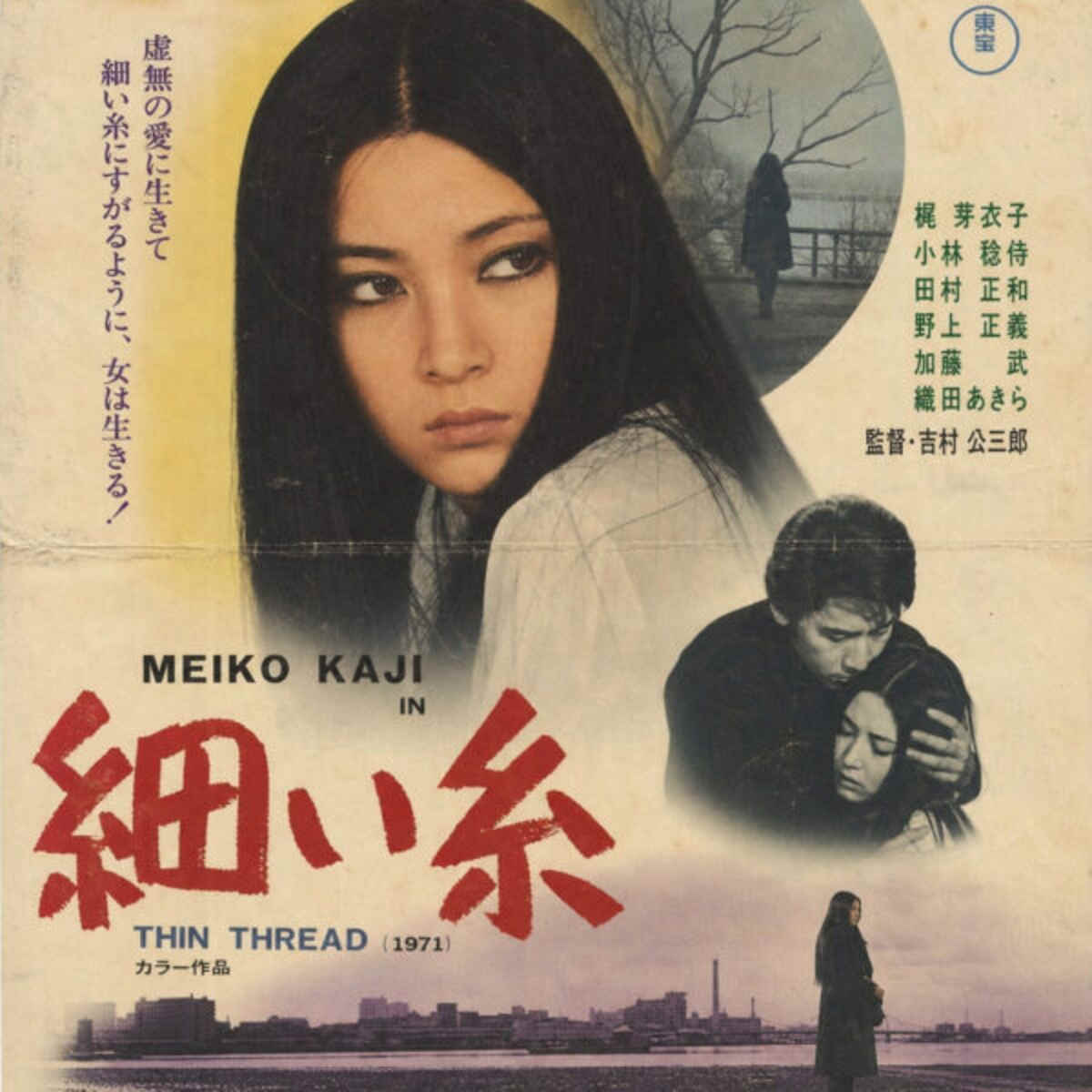
The landscape of Japanese cinema in the early 1970s was a volatile, deeply fascinating arena of artistic reinvention. Caught between the collapse of the traditional studio system and the rise of independent, boundary-pushing cinema, directors and actors were forced to navigate a rapidly changing cultural tide. Among the hidden gems of this transformative era is a film that weaves a delicate but devastating narrative about human connection: Thin Thread (Hosoi Ito), released in 1971. The Interesting Info about ดูหนังฟรี.
If you have been searching for a comprehensive guide on the Thin Thread (1971) film: overview, legacy, and where to watch legally online in the United States, you have arrived at the ultimate resource. This film, directed by the visionary Toshiya Fujita and starring the legendary Meiko Kaji, remains a profound exploration of youth, alienation, and the fragile ties that bind us together.
In this extensive exploration, we will dive deep into the film’s narrative, dissect the stylistic choices of its director, analyze the cultural backdrop of 1970s Japan, and provide actionable, practical advice on how modern cinephiles can track down a high-quality, legal full movie stream.
Part 1: The Cultural and Cinematic Context of 1971 Japan
To truly appreciate Thin Thread, one must first understand the environment in which it was forged. The history of Japanese drama movies 1971 is a story of economic friction and artistic rebellion. By the late 1960s, the golden age of Japanese cinema—dominated by titans like Akira Kurosawa, Kenji Mizoguchi, and Yasujirō Ozu—had ended. Television sets had invaded living rooms across the nation, leading to a drastic drop in theater attendance.
The Evolution of Nikkatsu Studios
Nikkatsu, Japan’s oldest major film studio, was hemorrhaging money by 1971. To survive, the studio was on the precipice of a radical shift. Later in the year, Nikkatsu would officially transition into producing Roman Porno (romantic pornography)—softcore films that saved the studio from bankruptcy while surprisingly allowing young directors immense creative freedom, provided they met certain quota requirements for adult content.
However, just before this complete pivot, Nikkatsu was producing gritty, youth-oriented action films and poignant dramas designed to capture the restless spirit of the Japanese counterculture. The Nikkatsu films of the 1970s are characterized by their raw kinetic energy, cynical protagonists, and vibrant use of color and location shooting. Thin Thread sits squarely in this transitional pocket—a film imbued with the rebellious energy of the studio’s youth-oriented “New Action” films, but anchored by a quiet, brooding dramatic core.
Understanding this backdrop is essential. The characters in Thin Thread are not just navigating their own personal traumas; they are wandering through a cinematic and literal Tokyo that is tearing down its past to build an uncertain, neon-lit future.
Part 2: Unraveling the Narrative (Plot and Structure)
For those unfamiliar with the film, a detailed Hosoi Ito 1971 plot summary reveals a story that is deceptively simple on the surface but incredibly dense in its emotional subtext.
Thin Thread follows the story of a young, disillusioned woman living in Tokyo, struggling to reconcile her traditional upbringing with the hyper-modern, individualistic reality of city life. She becomes entangled in a complex web of relationships—a fragile, “thin thread” of emotional dependencies that threatens to snap at any moment.
Act I: The City of Strangers
The film opens with sweeping, melancholic shots of Tokyo’s concrete landscape. Our protagonist is introduced as a solitary figure moving through crowded train stations and bustling intersections. She works a mundane job, her evenings spent in dimly lit jazz kissa (jazz cafes) that serve as sanctuaries for the city’s wandering youth. The narrative kicks into motion when she encounters a charismatic but deeply troubled young man, sparking a romance born more out of mutual loneliness than genuine affection.
Act II: The Tension of Connection
As the relationship deepens, the film shifts its focus to the psychological burdens both characters carry. The protagonist’s family back in her rural hometown continually pressures her to return and conform to traditional domestic expectations. Meanwhile, her lover is caught up in the dangerous, petty criminal underworld of Shinjuku. The titular “thin thread” serves as a metaphor for their relationship—a bond that is constantly stretched to its absolute limits by economic hardship, societal expectations, and their own internal traumas.
Act III: Inevitable Severance
The final act of the film is a masterclass in building slow-burn tension. Without spoiling the emotional climax, the story culminates in a quiet, devastating realization about the limits of love in a transactional world. Unlike the explosive finales of Nikkatsu’s action films, the climax of Thin Thread is internal and profoundly melancholic, leaving the viewer to ponder the fleeting nature of human relationships.
Part 3: The Thematic Core
The lasting power of Thin Thread lies not just in its plot, but in its exploration of universal anxieties. The film is a seminal text when examining themes of urban isolation in Japanese film.
The Paradox of the Crowd
Post-war Japan experienced an economic miracle, rapidly transforming from a war-torn nation into an industrial superpower. Millions of young people migrated from rural provinces to metropolitan hubs like Tokyo and Osaka. However, this economic boom came with a severe psychological cost.
In Thin Thread, director Toshiya Fujita utilizes architecture to emphasize this isolation. Characters are frequently framed through windows, trapped behind glass, or dwarfed by massive, brutalist concrete structures. Even in scenes where the protagonist is surrounded by thousands of people at a scramble crossing, the sound design muffles the crowd, amplifying her internal silence. This visual language perfectly captures the paradox of urban life: being surrounded by millions of people yet feeling completely, utterly alone.
Tradition vs. Modernity
The “thin thread” also represents the fraying connection between the older, traditional Japanese generation and the post-war youth. The protagonist’s struggle is a microcosm of a national identity crisis. Should she return to the safety (and suffocation) of her rural, patriarchal family structure, or forge ahead in the cold, liberating, yet dangerous modern city? The film refuses to offer easy answers, leaving the tension unresolved and hauntingly realistic.
Part 4: A Director’s Vision
To discuss this film without highlighting the man behind the camera would be a disservice. The Toshiya Fujita directorial career is one of the most fascinating trajectories in Japanese cinema.
From Studio Craftsman to Auteur
Fujita began his career as an assistant director at Nikkatsu in the 1950s, learning the craft of filmmaking within a rigid studio hierarchy. By the time he began directing his own features in the late 1960s and early 1970s, he had mastered the rules of classical filmmaking—which allowed him to know exactly when and how to break them.
In Thin Thread, Fujita demonstrates a remarkable ability to blend gritty documentary-style realism with highly stylized, poetic visual motifs. He was known for his improvisational approach on set, often encouraging his actors to deviate from the script to capture genuine, unvarnished moments of emotion.
The Master of Youth Cinema
Fujita had an unparalleled empathy for rebellious, lost youth. While other directors of the era judged their counter-culture characters, Fujita filmed them with immense compassion. He understood their anger, their fashion, their music, and their despair. This empathetic lens is precisely what gives Thin Thread its enduring heartbeat.
The Impact of Toshiya Fujita on cinema cannot be overstated. His ability to fuse high-art aesthetics with pulp narratives deeply influenced a generation of filmmakers, both in Japan and internationally. Modern directors such as Quentin Tarantino have frequently cited Fujita’s filmography as a masterclass in framing, pacing, and visual storytelling.
Part 5: The Rise of an Icon
A film is only as strong as its central performance, and Thin Thread benefits from the presence of one of Japanese cinema’s greatest muses. Analyzing Meiko Kaji early acting roles provides a fascinating window into the evolution of an international screen icon.
Before the Vengeance
Most Western audiences know Meiko Kaji for her deadly, icy stares in the Female Prisoner 701: Scorpion series, or as the umbrella-wielding assassin in Lady Snowblood. However, before she became the patron saint of cinematic vengeance, she was refining her craft in grounded dramas at Nikkatsu.
In Thin Thread, Kaji’s performance is a revelation of vulnerability. Stripped of the hyper-stylized costumes and weapons of her later roles, she relies entirely on her expressive, soulful eyes to convey a deep well of internal suffering. She portrays a woman who is not a highly trained killer, but an ordinary person desperately trying to keep her head above water.
A Masterclass in Subtlety
Kaji’s performance is incredibly restrained. In scenes where a lesser actress might resort to melodramatic weeping, Kaji remains stoic, allowing a single tear or a slight shift in posture to communicate volumes. This early role proved that she was not just a genre star, but a dramatic powerhouse capable of carrying a complex, emotionally taxing narrative.
A Comparative Look: Hosoi Ito vs. Lady Snowblood
A popular discussion among cinephiles is the Hosoi Ito vs Lady Snowblood comparison. Both films were directed by Toshiya Fujita and star Meiko Kaji, yet they sit on completely opposite ends of the cinematic spectrum.
- Genre and Tone: Lady Snowblood (1973) is a heightened, blood-soaked samurai revenge epic based on a manga. It is highly stylized, featuring geysers of crimson blood and non-linear storytelling. Thin Thread (1971), by contrast, is a grounded, contemporary social realist drama.
- The Protagonist: Kaji’s Yuki in Lady Snowblood is an emotionless instrument of death, devoid of human attachments. Her character in Thin Thread is entirely defined by her desperate need for human attachment.
- Fujita’s Direction: The comparison highlights Fujita’s incredible versatility. He brings the same meticulous attention to visual composition to the quiet, smoky jazz clubs of Thin Thread as he does to the snow-covered battlefields of Lady Snowblood. Watching both films back-to-back offers a profound appreciation for one of cinema’s greatest director-actor partnerships.
Part 6: The Importance of Localization
Before we guide you on where to watch the film, it is vital to discuss how you watch it. For non-Japanese speakers, Finding high quality Japanese movie subtitles is the absolute key to unlocking the power of Thin Thread.
The Nuance of Translation
Japanese is a highly contextual language. Much of the emotional weight in a 1970s Japanese drama relies on what is not said, the level of formality (keigo) used between characters, and cultural idioms that do not easily translate into English.
In Thin Thread, the dialogue is often sparse and poetic. A poor translation—such as the auto-generated subtitles often found on illicit streaming sites—will completely strip the film of its nuance. A line meant to convey deep, resigned sorrow might be poorly translated into a blunt, robotic sentence that ruins the emotional climax of a scene.
What to Look For
When seeking out this film, ensure you are watching a version that has been translated by professional localization teams. Boutique physical media labels and curated streaming services invest heavily in hiring expert translators who understand the cultural context of 1970s Japan. This ensures that the English subtitles capture the tone, rhythm, and poetry of Fujita’s original script.
Part 7: The Modern Viewing Guide (How to Watch)
We have explored the history, the art, and the legacy of the film. Now comes the most practical question for modern cinephiles: how can you actually watch it today?
Navigating the world of vintage international cinema can be frustrating. A quick search engine query will often yield dozens of shady websites promising a thin thread 1971 full movie online. However, as an expert in cinema and digital media, I must strongly advise against this route. Let’s break down the streaming landscape, why you should prioritize legal options, and the best platforms available.
The Risks of the “Free” Search
It is common for fans to search for phrases like the thin thread 1971 full movie online free. While the temptation to click on a free link is understandable, especially for obscure, hard-to-find vintage films, the drawbacks are severe:
- Malware and Security Risks: Unlicensed streaming sites are notoriously riddled with aggressive pop-ups, phishing attempts, and malware designed to compromise your device.
- Abysmal Quality: Bootleg sites usually host highly compressed, low-resolution rips of the film. The audio is often out of sync, the image is pixelated, and Toshiya Fujita’s beautiful cinematography is reduced to a muddy, unwatchable mess.
- Terrible Subtitles: As mentioned earlier, illegal streams usually feature machine-translated subtitles that render the nuanced dialogue incomprehensible.
The Ethical Choice
Understanding Why watch legal film streams is crucial for the survival of classic cinema. Film preservation is an incredibly expensive endeavor. Restoring a 1971 Japanese film involves tracking down the original 35mm negative, scanning it frame-by-frame in 4K resolution, color grading it to match the director’s original vision, cleaning up the audio tracks, and paying for professional translation.
When you choose Legal Japanese movie streaming US options, your subscription fees and rental costs directly fund the boutique labels and preservation societies doing this vital work. By watching legally, you are casting a vote with your wallet, telling the industry that there is a demand for restoring and archiving classic world cinema.
Part 8: Navigating Legal Streaming Ecosystems
So, exactly How to stream Hosoi Ito legally in the United States? The availability of vintage Japanese films frequently rotates due to complex, shifting licensing agreements. However, there are a few primary avenues you should always check.
Is Hosoi Ito streaming on Mubi?
Mubi is one of the premier platforms for cinephiles, known for its hand-picked, curated selection of international cinema. Users frequently ask, “Is Hosoi Ito streaming on Mubi?“
Because Mubi’s catalog rotates continuously (often featuring a “Film of the Day” model alongside a larger library), Thin Thread may cycle in and out of availability. Mubi frequently highlights the works of Toshiya Fujita, especially during retrospectives of Nikkatsu cinema or spotlights on Meiko Kaji. If you are a subscriber, use the platform’s search function and add the film to your watchlist so you are notified the moment it becomes available.
Best Platforms for Vintage World Cinema
If the film is not currently on Mubi, here are the Best platforms for vintage world cinema where you are most likely to find a legal full movie stream:
- The Criterion Channel: This is the gold standard for classic cinema in the United States. They boast an incredible, permanent library of Japanese classics. The Criterion Channel frequently hosts curated collections (e.g., “Japanese Noir,” “The Women of Nikkatsu,” or “Directed by Toshiya Fujita”). Their streams feature flawless video bitrates and expertly translated subtitles.
- Arrow Player: Arrow Video is a boutique label specializing in cult, genre, and classic Asian cinema. Their dedicated streaming service, Arrow Player, is a treasure trove for 1970s Nikkatsu films. Given their extensive work restoring Meiko Kaji’s filmography, this is a highly likely home for a film like Thin Thread.
- Kanopy / Hoopla: Do not underestimate your local library! Many US library systems offer free access to Kanopy or Hoopla with your library card. Kanopy, in particular, licenses heavily from the Criterion Collection and other indie distributors. It is a fantastic, completely legal way to stream high-quality cinema for free.
- VOD Platforms (Apple TV, Amazon Prime Video, Vudu): Many niche films are available for digital rental (usually between $3.99 and $4.99). Searching for the film on these transactional Video-On-Demand platforms is a great way to secure a legal, high-definition viewing experience.
Part 9: The Physical Media Renaissance
For true cinephiles, streaming is only a temporary solution. Films can vanish from streaming platforms overnight due to expiring licenses. If you want to ensure you always have access to Fujita’s masterpiece, physical media is the answer.
If you are wondering Where to buy Thin Thread 1971 movie, you will need to look toward the boutique Blu-ray market.
The Boutique Label Advantage
Companies like The Criterion Collection, Arrow Video, Eureka Entertainment (Masters of Cinema), and Radiance Films are dedicated to rescuing films like Thin Thread from obscurity.
When searching for the film on DVD or Blu-ray, keep the following in mind:
- Box Sets: Often, niche 1971 dramas are not released as standalone discs in the West. Instead, they are bundled in curated box sets. Look for box sets focused on “Nikkatsu Noir,” “Toshiya Fujita,” or “Meiko Kaji Collections.”
- Region Coding: If you are importing a Blu-ray from the UK (such as an Arrow Video or Eureka release), ensure you have a Region-Free Blu-ray player, as standard US players are locked to Region A.
- Special Features: Buying the physical edition often rewards you with incredible supplemental material. These discs frequently include audio commentaries by Japanese cinema historians, video essays, interviews with surviving cast members, and thick booklets containing essays that provide even deeper context than this article.
Supporting physical media ensures that the history of Japanese drama movies 1971 is physically preserved on your shelf, immune to server outages or internet connectivity issues.
Part 10: The Lasting Legacy of Thin Thread
As we reach the conclusion of our deep dive into the Thin Thread (1971) film: overview, legacy, and where to watch legally online in the United States, it is worth reflecting on why a relatively obscure film from over fifty years ago still warrants such passionate discussion today.
Thin Thread is a time capsule. It captures a specific, fleeting moment in Japanese history—a moment caught between the devastation of the past and the hyper-capitalism of the future. Yet, despite its specific cultural markers, the emotions it portrays are timeless. The search for meaning, the pain of isolation, and the desperate attempt to hold onto the “thin thread” of love in an uncaring world are themes that resonate just as powerfully with a modern audience in the United States today as they did with Japanese audiences in 1971.
Toshiya Fujita crafted a film of quiet, devastating beauty, and Meiko Kaji breathed life into a character that remains a masterclass in understated acting. Together, they created a work of art that elevates the standard melodrama into a profound piece of cinema.
Your Action Plan for Exploring Vintage Japanese Cinema
If you are ready to embark on your viewing journey, follow these actionable steps:
- Check Subscription Services First: Log into Mubi, The Criterion Channel, or Arrow Player. Use their search functions for “Toshiya Fujita” or “Meiko Kaji” to see if Thin Thread is currently in rotation.
- Utilize Your Library: Sign up for Kanopy using your local library card and search their extensive international film database.
- Rent Digitally: Check Apple TV, Amazon, or Google Play for a legal, one-time VOD rental.
- Invest in Physical Media: Search specialty retailers like DiabolikDVD, Orbit DVD, or directly through Arrow/Criterion for Blu-ray box sets that may house the film.
- Avoid Piracy: Resist the urge to use illegal, free streaming sites. Protect your devices from malware and ensure you are watching the film in the high resolution and with the accurate subtitles that it deserves.
By choosing to stream and view classic films legally, you become a patron of cinematic arts. You help ensure that the magnificent, melancholic beauty of films like Thin Thread are preserved, restored, and made available for the next generation of film lovers to discover, analyze, and cherish.
In a modern cinematic landscape increasingly dominated by computer-generated spectacle and algorithmic storytelling, returning to the gritty, deeply human, and emotionally resonant world of 1970s Nikkatsu cinema is a revitalizing experience. Thin Thread is waiting to be discovered. Follow the thread, and let it lead you into one of the most rewarding eras in global film history.
