


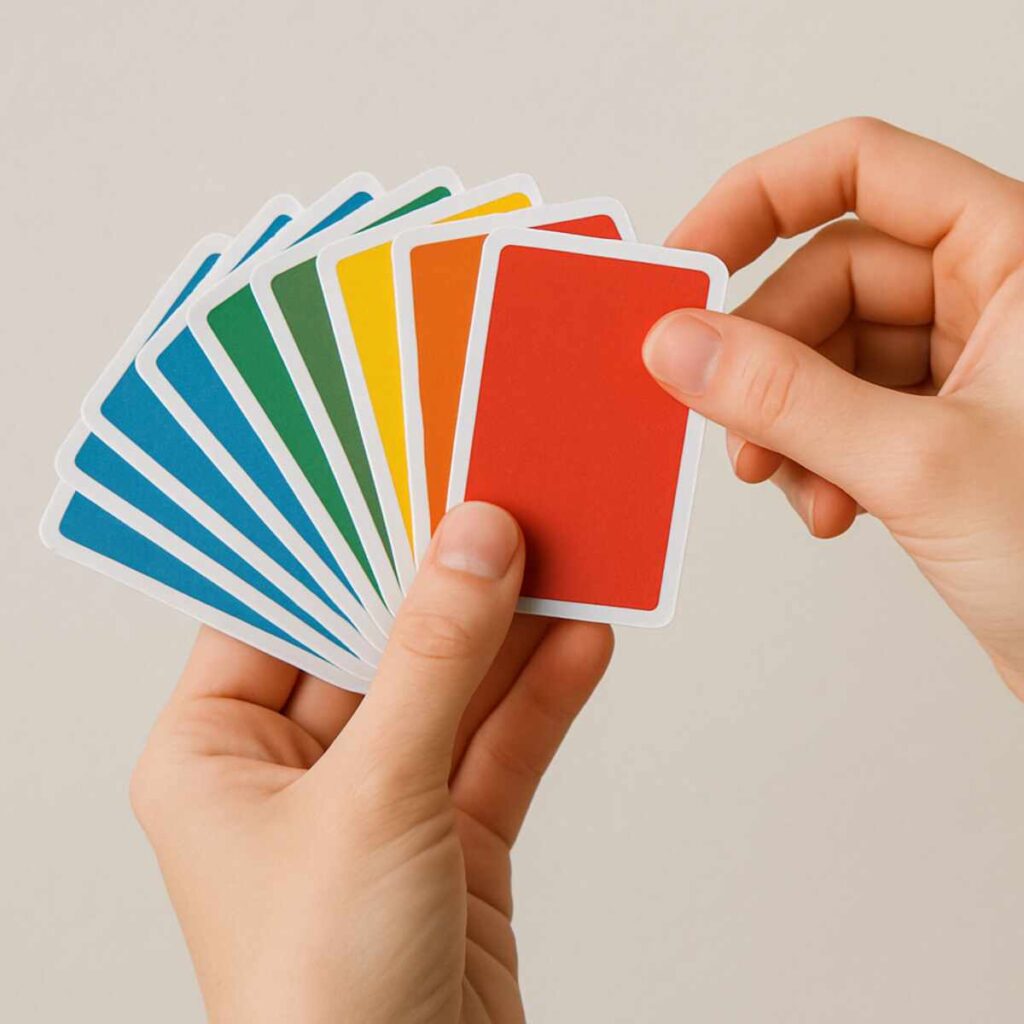
Have you ever sat down for a game night, only to have someone pull out a game with a thousand cards and a rulebook the size of a novel? It’s an intimidating feeling. But what if there was a way to play where everyone starts on an even playing field, with no prior collection or experience needed? Welcome to the world of drafting card games. Check out ketua911 to know more
The concept is as simple as picking teams for a schoolyard game. You’re given a small stack of cards, you pick the one you want to keep, and then you pass the rest to the person next to you. This “pick-and-pass” cycle continues until everyone has built a unique deck on the spot.
This method’s real genius is its fairness. Because everyone builds their deck from the same shared pool of cards, no one can show up with an unbeatable, expensive deck they bought beforehand. Every game is a fresh puzzle that rewards clever thinking over a big budget. This simple choice—pick one, pass the rest—is the secret to one of the most accessible and endlessly replayable ways to enjoy games.
What is the Golden Rule of Drafting? Pick One, Pass the Rest
The process of card drafting is as simple as its nickname: “pick and pass.” Imagine you and your friends are sitting around a table, and each person gets a small, sealed stack of about fifteen cards. In many games, this is called a Pack, but you can just think of it as your starting handful. You open it, look through all the cards, and choose just one—the one that looks coolest, strongest, or most interesting to you. You place that card face down in front of you. That’s your first pick.
Now, you simply pass the rest of your cards to the person sitting next to you. At the same time, the person on your other side is handing their remaining cards to you. You’ll pick up this new, slightly smaller stack, look through it, and once again, pick just one card to add to your pile. This is the repeating rhythm of the game: you receive cards, pick one, and pass the rest.
This cycle continues, with the stacks of cards getting smaller each time, until there are no cards left to pass. When the dust settles, that pile of cards you’ve collected is yours. You didn’t just get dealt a random hand; you curated it, one choice at a time, from the same pool of cards as everyone else. This foundation ensures every game night can be both fair and wonderfully unpredictable.
Why Drafting Makes Every Game Night Fair and Unpredictable
One of the biggest worries when trying a new card game is feeling outmatched. What if your friend has been collecting cards for years and shows up with a super-powered deck you can’t possibly beat? Drafting solves this problem completely. Since everyone builds their deck from the same shared pool of cards, no one gets to bring a pre-built advantage to the table. The game isn’t about who owns the best cards; it’s about who can make the most clever choices with the cards available to everyone right now. It’s a wonderful equalizer that puts a brand-new player on a level playing field with a seasoned veteran.
Beyond just being fair, drafting ensures that no two games are ever the same. You never know what cards will be opened, what your neighbors will pass you, or what surprising combinations you might discover. Think of it like being on a cooking show where you’re given a new basket of mystery ingredients each time. One night, you might build a deck full of powerful robots; the next, you might be assembling a team of sneaky ninjas. This constant variety keeps the game fresh and exciting, turning every session into a unique puzzle.
This element of surprise also removes the pressure to build a “perfect” deck. In a draft, there is no single right answer. Your goal isn’t to create the best deck possible in the entire world, but simply the best deck you can from the limited, and sometimes quirky, options you’re given. It’s a fun, low-stakes creative challenge where success comes from adapting and making smart decisions on the fly.
Your First Draft Turn: A Simple Walkthrough with Sushi Go!
To understand what drafting actually feels like, let’s put you in the player’s seat. We’ll use one of the best card games with a draft mode for beginners: Sushi Go!. The entire game is built around this single, fun mechanic, making it the perfect example.
Imagine the game starts. You’re dealt a hand of cards, each showing a colorful piece of sushi. The goal is to grab cards that create high-scoring sets. Let’s say in your first hand you see four cards that catch your eye:
- Two Maki Roll cards (these reward you for having the most rolls at the end of the round)
- One Tempura card (it’s only worth points if you collect a second one)
- One Pudding card (it doesn’t score now, but contributes to a final bonus at the very end of the game)
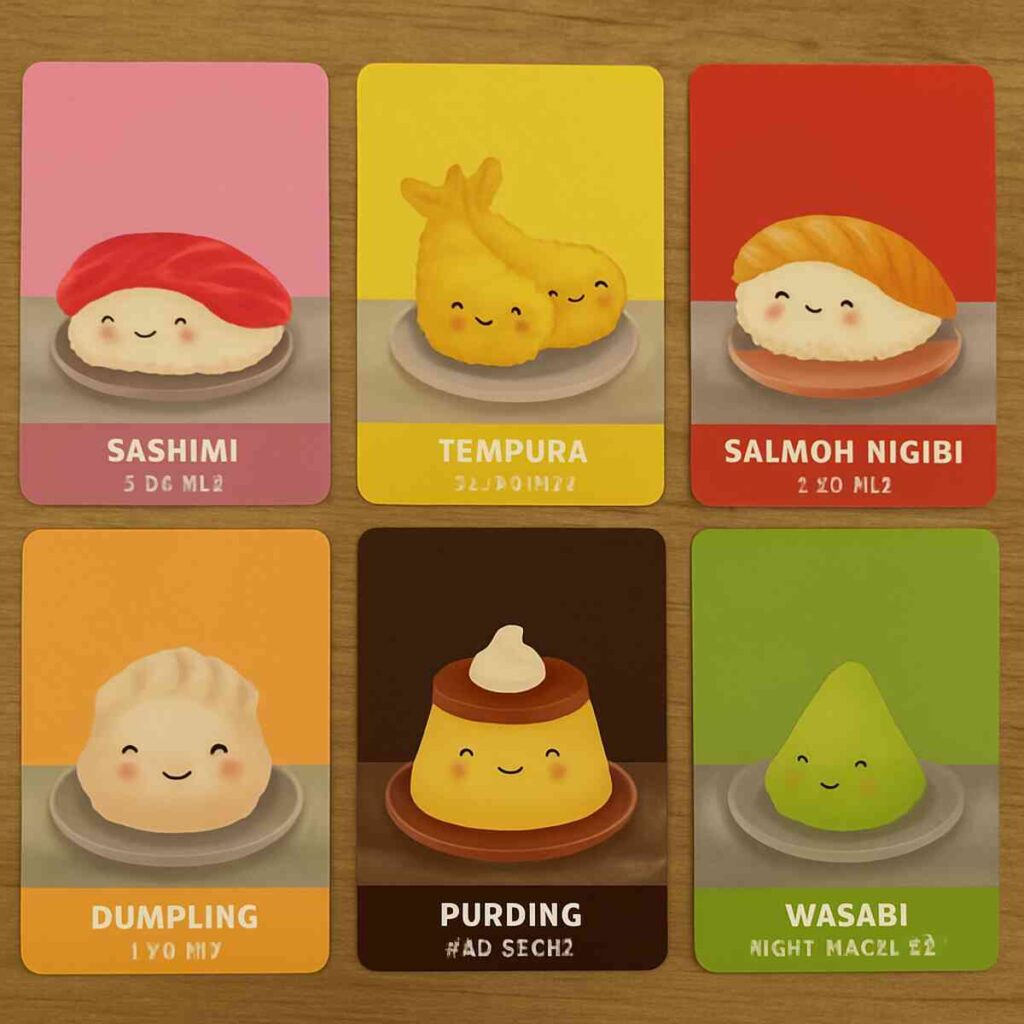
So, which do you pick? There is no wrong answer, but each choice begins a different strategy. Taking the Tempura is a gamble; you’re betting that you’ll see another one later. The Pudding is a safe, long-term investment. But those two Maki Roll cards? Taking one gives you an immediate head start in the race for the “most maki” bonus. Let’s say you decide to pick a Maki Roll, placing it face-down in front of you.
You’ve made your pick. Now, you take the remaining cards in your hand and pass them to the player on your left. At the same time, the player on your right passes their remaining cards to you. This simple sequence—pick, then pass—is the core loop of all drafting card games. As you pick up that fresh hand of cards, your thinking has already started to shift.
How to Pick Your Cards: Thinking Like a Chef, Not a Collector
As that new stack of cards arrives from your neighbor, your perspective starts to change. You’re no longer just looking for a single, impressive card. You now have a starting piece—in our last example, it was a Maki Roll—and your job is to find what goes with it. The first step to improving is to shift from being a collector who grabs individual treasures to a chef who is assembling a recipe. A collector ends up with a random pile of nice things; a chef ends up with a meal.
Think of it this way: when you’re cooking, you don’t just grab your favorite ingredients one by one. You start with a plan. If you decide to make spaghetti, you’ll pick up pasta, then look for tomato sauce, and then maybe some garlic. Each choice informs the next. In drafting, your first card is like choosing your main course. Every card you pick after that should ideally complement the recipe you’re trying to create.
This concept changes the value of every card you see. Remember that lone Tempura card from our first hand? On its own, it’s worth nothing. However, if you had picked it and were then passed another hand that contained a second Tempura card, that second card would suddenly become the best possible choice. Taking it would complete the set and score you five points. You aren’t just picking good cards; you are picking cards that make your other cards better.
The First Pick Dilemma: What Makes a Card a Good First Choice?
Staring at that first hand of brand-new cards can feel like the most important decision in the game. With no recipe started, which ingredient do you grab? Most strong first picks offer one of three key benefits: raw Power, open-ended Flexibility, or a clear Direction.
A card with Power is like a superstar athlete—it’s just great on its own and doesn’t need much help to shine. It’s a safe, high-value choice that will be a strong part of your deck no matter what else you pick. A card with Flexibility, on the other hand, is like a versatile ingredient, such as onions or garlic; it doesn’t define the meal, but it fits into almost any recipe you decide to make later. Picking a flexible card keeps your options wide open. Finally, a card that gives Direction is a bold move. It’s like grabbing a rare spice that demands a very specific dish. It’s a gamble, but if you can find the other pieces for its recipe, the result can be spectacular.
Your first choice simply sets a starting point, not a final destination. Whether you begin with a powerful solo artist, a flexible team player, or a signpost pointing to a specific strategy, you are just taking the first step. The cards that circle the table carry hidden messages, and learning to read them is a huge advantage.
The Pro’s Secret Weapon: What Are “Signals” in a Draft?
The idea of finding “hidden messages” in the cards you’re passed is the single biggest leap you can make as a player. In drafting, these messages are called signals, and learning to read them is like turning on the lights in a dark room. A signal isn’t a specific card, but rather the story told by the cards that are left in the pack when it gets to you. It’s a clue about what the players passing to you are—and more importantly, are not—collecting.
Think of it like being at a party where pizza is being passed around. If a box gets to you and all the plain cheese slices are gone, but every pepperoni slice is still there, that’s a strong signal. The people before you clearly don’t want pepperoni. In a draft, if you get a pack that’s still full of powerful “Wizard” cards late in the picking process, it’s a clear sign that your neighbors aren’t building a Wizard-themed deck. Reading signals is all about paying attention to what good cards are being ignored.
When you spot a strong signal like this, it reveals what pros call an open lane—a type of strategy or card color that nobody else seems to be competing for. By steering into that lane, you give yourself the best chance to get all the key cards for that strategy. Instead of fighting with two other people for the best Dragon cards, you can have your pick of all the best Wizard cards. You aren’t just building your own deck in a vacuum; you are cleverly positioning yourself within the group.
Reading signals transforms drafting from a simple game of picking your favorite card into a more dynamic and observant experience. You start to think about what your neighbors might be building, how you can find your own uncontested space, and even when to take a key card just to keep it away from them.
Beyond Sushi: Where You’ll Find Drafting in the Wild
That simple act of picking a card and passing the rest isn’t just a mechanic for a single game; it’s a foundational concept that powers some of the most popular tabletop games in the world. In the award-winning game 7 Wonders, players draft cards representing everything from military might to scientific discoveries to build an entire ancient civilization. The theme is grander, and the strategy is deeper, but the core “pick and pass” engine is the same.
However, no game has done more to popularize drafting than the behemoth of the card game world: Magic: The Gathering. For millions of players, drafting is the default way to play. It puts everyone on a level playing field. Instead of needing to spend years and a small fortune building a perfect deck, players can just sit down with a few fresh packs of cards and build something new on the spot. It makes a famously complex game incredibly accessible and ensures that every match is a unique puzzle. Advanced strategies like reading signals are the very skills that Magic players use in high-stakes tournaments.
From building a city in 7 Wonders to slinging spells in Magic, this elegant mechanic proves its versatility time and again. It transforms a game from a test of who has the best pre-built collection into a battle of wits, observation, and on-the-fly decision-making.
How You Can Host Your Own Draft Night This Weekend
Hosting your own draft night is surprisingly simple and one of the best ways to introduce your friends to a new style of game night. Forget about needing a massive game collection or hours of complex setup; a successful draft is built on good company and a single, well-chosen game. The group of people passing cards to each other is often called a “drafting pod,” and creating one is easier than you think. Here’s a straightforward, four-step plan to get you started:
- Get the Right Game. Pick a game where drafting is the main event. Sushi Go! is the gold standard for a first-time draft night—it’s affordable, the rules are incredibly simple, and a full game takes less than 20 minutes.
- Gather Your Pod. Drafting is fantastic with 4 to 7 players. This number is the sweet spot that keeps the game moving and ensures the stacks of cards you pass are always full of interesting new choices.
- Set the Table. No elaborate board or pieces are needed. Just make sure everyone has a seat at the table with enough space in front of them to lay out the cards they’ve collected.
- Explain the Core Rule. This is the easiest part. You can confidently tell your friends, “We’ll each get a hand of cards, secretly pick one to keep, and then pass the rest to the person on our left.” That single sentence is 90% of the game.
That’s all there is to it. The goal of your first draft isn’t to execute a flawless strategy, but to share a fun experience as everyone discovers the game together.
Your New Favorite Way to Play: Go Build Your Deck!
The concept of “drafting” is no longer a complex secret handshake but a simple rhythm: pick one card, pass the rest. You are ready to sit down at the table and enjoy the game from the very first hand.
The true beauty of drafting card games is their fairness—every player starts with the same opportunity, making each game a fresh puzzle. Your first step is clear: find a drafting game you like and just play. Don’t worry about perfecting your strategy immediately; focus on the fun of making choices.
Think of each draft not as a test, but as a chance to build a unique recipe from a shared pantry of ingredients. Success isn’t about having the perfect deck, but delighting in what you’ve created from the options passed your way. Go enjoy the surprise.